.jpg)
There’s something quietly mind-blowing about watching a massive ship rise up out of the ocean, glide across a jungle-fringed lake, then descend back down on the other side. No CGI. No illusion. Just one of the most ingenious feats of engineering ever built.
The Panama Canal isn’t just a shortcut between oceans. It’s a masterclass in human ambition, precision, and problem-solving that still powers global travel today. And yes, sailing through it feels just as surreal as it sounds. Our canal-crossing sailings are rare, coveted, and happen only twice a year...and now, we'll explain why.
Why the Panama Canal was built in the first place
Before the canal, getting from the Atlantic to the Pacific meant a long, unpredictable journey around the southern tip of South America. We’re talking thousands of extra miles, rough seas, and serious time lost.
The idea was simple. Cut through Panama, connect two oceans, and transform global trade overnight.
The reality? Far from simple.
Construction officially began in the early 1900s, tackling dense rainforest, heavy rainfall, and one of the biggest engineering challenges of the time. When it finally opened in 1914, it changed shipping routes forever and instantly became one of the most important waterways on Earth.
How the Panama Canal actually works
Here’s the part that feels like magic until you break it down.
The canal doesn’t just slice straight through at sea level. Instead, it lifts ships up, carries them across land, then lowers them back down using a system of locks.
Think of it like a water-powered elevator for ships.
Step-by-step, here’s the journey:
- A ship enters from one ocean and moves into the first lock chamber
- Water flows in, raising the ship about 26 meters above sea level
- The ship sails across Gatun Lake, an artificial lake at the canal’s center
- The ship enters another set of locks on the other side
- Water drains out, lowering the ship back to sea level in the other ocean
No pumps. No mechanical lifting.
Everything runs on gravity, using freshwater from nearby lakes to fill and empty the lock chambers. It’s elegant, efficient, and surprisingly low-tech for something so globally critical.
The role of Gatun Lake (the unsung hero)
Gatun Lake isn’t just a scenic stretch in the middle of the canal. It’s the system’s beating heart.
Created by damming the Chagres River, this massive lake provides the water needed to operate the locks. Every time a ship passes through, millions of liters of freshwater are used to raise and lower it.
That’s why rainfall matters here. A lot.
Panama’s tropical climate keeps the system running, but in drier years, water levels can affect how many ships pass through daily. It’s a reminder that even the most impressive engineering still depends on nature.
The expansion that changed everything
By the early 2000s, ships were getting bigger. Much bigger.
So in 2016, the canal introduced a major upgrade: a new set of wider, more efficient locks designed to handle larger vessels, often called “New Panamax” ships.
What changed?
- Larger ships can now pass through
- Water-saving basins reduce freshwater usage
- Increased capacity means more global trade flows through Panama
This expansion didn’t just modernize the canal. It secured its place in the future of global shipping.
Why the Panama Canal is still a big deal
In a world of advanced logistics and high-speed everything, you might think a 100-year-old canal would feel… outdated.
It’s the opposite.
The Panama Canal remains one of the most important trade routes in the world, connecting major economies and reducing travel time dramatically. It’s used by thousands of vessels each year, carrying everything from electronics to food to energy supplies.
But beyond commerce, it’s also a bucket-list travel experience.
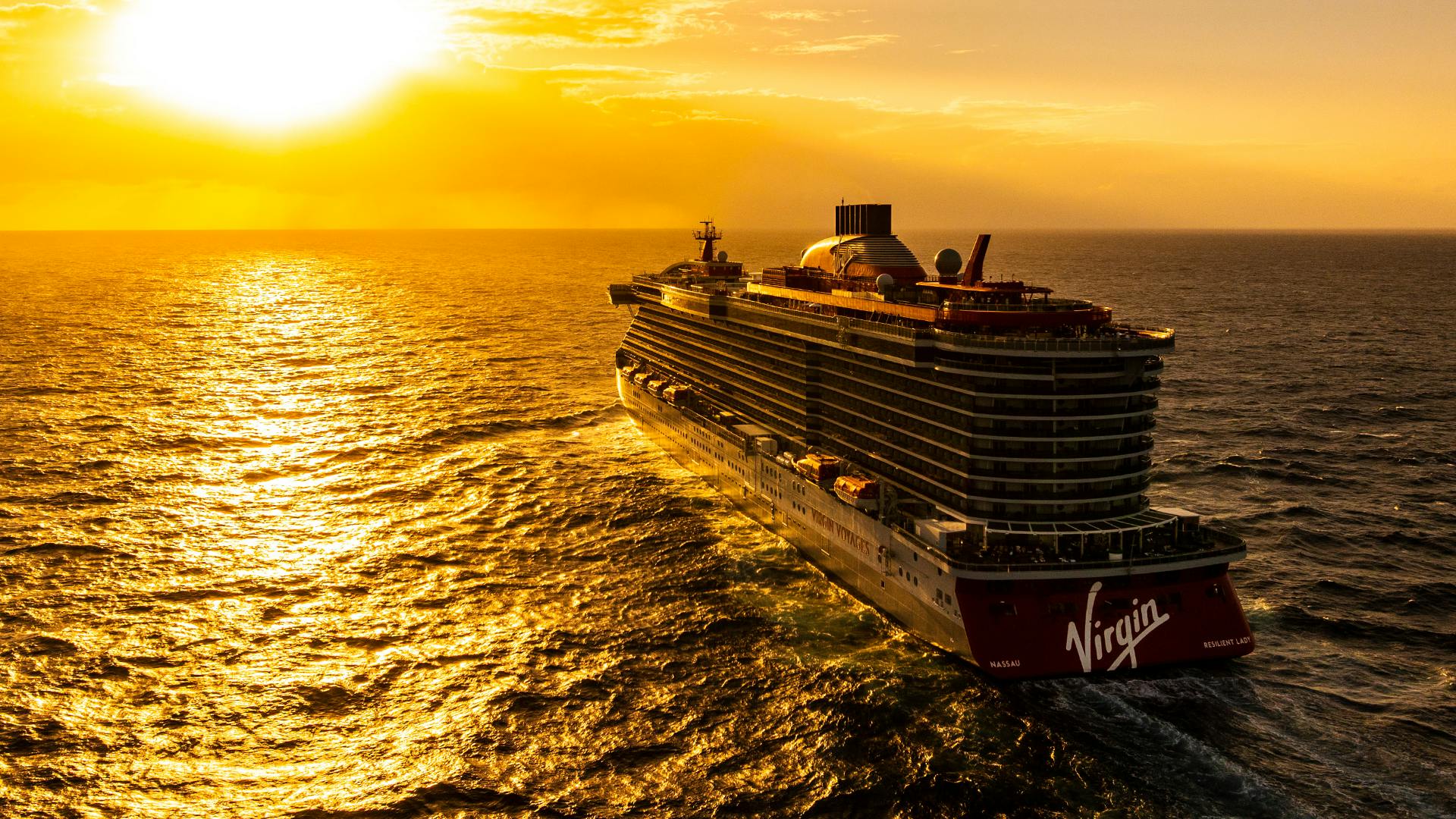
Sailing through the canal offers something rare. You’re not just passing through a destination, you’re witnessing a living piece of history still doing its job brilliantly. And when you do all that on board an adults-only ship that's won awards for its design, you can be confident you're getting the best experience possible.
What it’s like to sail through the canal
This is where engineering meets pure spectacle.
As your ship glides into the locks, the world slows down. You’ll feel the gentle rise, watch the water shift, and see the landscape change from open ocean to lush greenery.
It’s one of those moments where everyone suddenly stops what they’re doing and heads to the deck.
Expect:
- Up-close views of the lock system in action
- Dense jungle scenery along the route
- A front-row seat to one of the world’s most iconic crossings
It’s not just a transit. It’s an experience.
The final word
The Panama Canal proves that great design doesn’t age. It adapts, evolves, and keeps delivering exactly what the world needs.
More than a shortcut, it’s a symbol of what happens when bold ideas meet brilliant execution. And whether you’re crossing it for the first time or the fifth, it never loses its sense of wonder. Want to see what it's all about? Book a 2027 Panama Canal sailing today.